










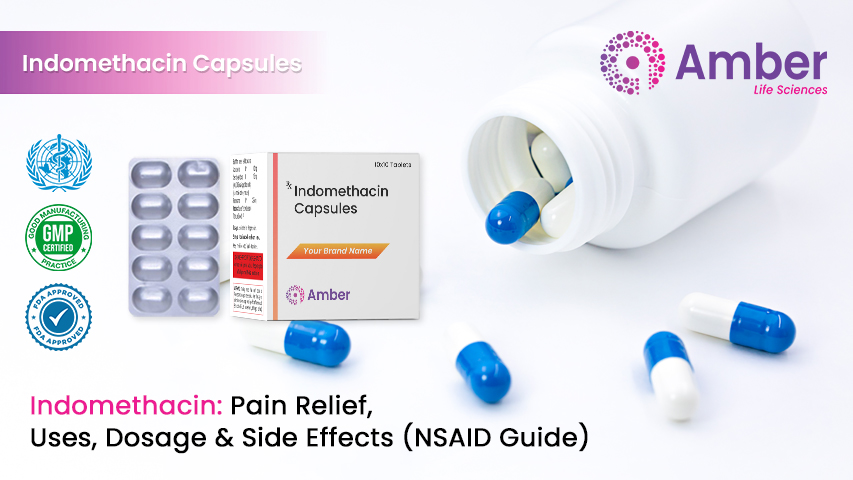
Indomethacin is a potent NSAID known for its effective pain-relieving, anti-inflammatory, and fever-reducing properties. It provides effective relief in conditions like arthritis, gout, bursitis, and tendonitis, and is a trusted option in short-term and specific clinical cases.
Amber Lifesciences Pvt. Ltd., a respected Indian pharmaceutical exporter, produces high-quality Indomethacin formulations and supplies them to global markets, including LATAM countries such as Brazil, Mexico, Argentina, Peru, and Colombia.
Primary Uses of Indomethacin
- Rheumatoid & Osteoarthritis, Ankylosing Spondylitis
- Acute Gouty Arthritis
- Bursitis and Tendonitis
- Patent Ductus Arteriosus (PDA) Closure in newborns
- Off-label Uses: Pericarditis, postoperative heterotopic ossification, and menstrual cramps
Mechanism of Action: How Indomethacin Works
- Non-Selective COX Inhibition
Blocks COX-1 and COX-2 enzymes, reducing prostaglandin production (PGE₂, PGI₂), which lowers pain, swelling, and fever. - Inflammation Modulation
Decreases neutrophil migration
Stabilizes lysosomal membranes
It may affect the NF-κB pathway to reduce inflammation
Dosage & Administration of Indomethacin
| Condition | Oral Dose | Max Daily |
|---|---|---|
| Acute Pain/Gout | 50 mg TID | 200 mg |
| Chronic Arthritis | 25–50 mg BID–TID | 150–200 mg |
| Rectal Suppository | 50 mg QID | — |
| Neonatal PDA | 0.1–0.3 mg/kg IV | — |
Take with food and use the lowest effective dose for the shortest duration.
Indomethacin Common & Serious Side Effects
Common (>10%)
- Gastrointestinal: heartburn, nausea, dyspepsia
- CNS: headache, dizziness
- Renal: fluid retention, mild creatinine rise
Serious (Seek medical attention)
- GI bleeding or ulcers (black stools, vomiting blood)
- Kidney damage or acute injury
- Worsening hypertension or heart failure
- Rare but severe: Stevens-Johnson Syndrome, aseptic meningitis
Indomethacin Contraindications & Precautions
- Avoid indomethacin if you have:
- Active peptic ulcer, recent GI bleeding
- Known NSAID allergy or aspirin-induced asthma
- Severe liver or kidney impairment
- Third-trimester pregnancy (risk of infant ductus closure)
- Use with care in patients with:
- Hypertension, heart failure, and elderly age
- Concurrent diuretics, blood thinners, lithium, SSRIs, methotrexate
Indomethacin Potential Drug Interactions
- Warfarin/Anticoagulants → ↑ bleeding risk
- Diuretics/ACE inhibitors → ↓ kidney function
- Lithium → ↑ blood levels
- SSRIs → ↑ GI bleeding
- Methotrexate → ↑ toxicity
Indomethacin: Key Monitoring Parameters
- Track GI symptoms and bleeding
- Regular check of renal function (BUN, creatinine)
- Monitor blood pressure
- Periodic CBC tests for chronic users
Why Choose Amber Lifesciences Pvt. Ltd. for Indomethacin?
Amber Lifesciences is a trusted GMP-certified pharmaceutical exporter from India, offering safe, high-purity Indomethacin tablets, injectables, and suppositories. Our stringent quality practices, full regulatory dossiers, and dependable supply chain make us the preferred partner across LATAM, Asia, Africa, and CIS regions.
Conclusion:
Indomethacin serves as an effective NSAID for both acute and chronic inflammatory conditions. Its non-selective COX inhibition delivers robust pain relief but requires caution due to potential GI, renal, and cardiovascular side effects.
Amber Lifesciences Pvt. Ltd. ensures a safe and compliant global supply of Indomethacin, backed by regulatory expertise and distribution excellence.
