












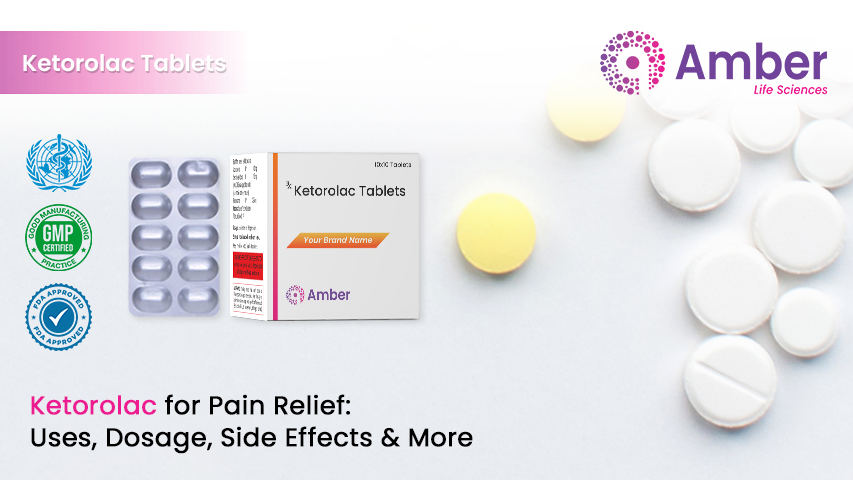
Amber Lifesciences Pvt. Ltd., a trusted pharmaceutical exporter from India, offers GMP-certified Ketorolac tablets and injectables for global partners in LATAM, Africa, and Asia.
What Is Ketorolac Used For?
- Post-operative pain (short-term, up to 5 days)
- Musculoskeletal pain
- Dental procedures
- Ocular inflammation (ophthalmic form only)
Unlike other NSAIDs like ibuprofen or naproxen, it is not recommended for chronic use due to its potent COX-1 inhibition and associated risks.
Available Forms of Ketorolac
- Tablets (oral)
- Intramuscular (IM) / Intravenous (IV) injections
- Nasal spray (e.g., Sprix®)
- Ophthalmic solution (for eye inflammation only)
Dosage Guidelines of Ketorolac
- Adults: 10 mg orally every 4–6 hours (max 40 mg/day); limit use to 5 days.
- IV/IM Dose: Varies based on condition and route, typically 30 mg every 6 hours.
- Elderly or Renal Impairment: Lower doses are recommended to minimize side effects.
- Nasal Spray: One spray per nostril every 6–8 hours.
Always take with food or water to reduce gastrointestinal upset.
Common & Serious Side Effects of Ketorolac
Common:
- Nausea, dizziness, drowsiness
- Stomach pain, indigestion
- Headache
Serious (Seek Immediate Help):
- Gastrointestinal bleeding (black stools, vomiting blood)
- Kidney dysfunction (low urine, swelling)
- Cardiovascular events (e.g., heart attack, stroke)
- Severe allergic reactions
Contraindications – When Not to Use Ketorolac
- Active peptic ulcers or GI bleeding
- Severe renal disease
- Aspirin/NSAID allergy
- Pre- or post-CABG surgery
- Pregnancy (third trimester)
- Pediatric use under 17 years
Key Drug Interactions with Ketorolac
- Blood thinners (warfarin, aspirin): ↑ Bleeding risk
- Other NSAIDs: ↑ GI side effects
- SSRIs/SNRIs: ↑ Risk of stomach bleeding
- Diuretics/ACE inhibitors: May reduce kidney function
Why Use Ketorolac Instead of Other NSAIDs?
| Feature | Ketorolac | Ibuprofen | Naproxen |
|---|---|---|---|
| Strength | High | Moderate | Moderate |
| Duration | Short-term | Long-term | Long-term |
| COX-1 Inhibition | Strong | Moderate | Moderate |
| Bleeding Risk | Higher | Lower | Lower |
| Antipyretic Effect | Mild | Strong | Strong |
It offers morphine-level pain relief without the addiction risk, but its toxicity profile limits its use to ≤5 days.
How Ketorolac Works: Mechanism of Action
Ketorolac inhibits both COX-1 and COX-2 enzymes, reducing prostaglandin synthesis — the main culprit in pain and inflammation.
- Peripheral action: Reduces inflammation at the injury site.
- Central effect: May also block pain transmission in the CNS.
- Not selective: Its strong COX-1 inhibition explains the increased risk of ulcers and bleeding.
Clinical Considerations for Safe Use
- Limit to 5 days to reduce serious GI and renal side effects.
- Avoid alcohol, which increases bleeding risk.
- Do not combine with other NSAIDs.
- Monitor elderly patients closely for kidney and GI issues.
Why Choose Amber Lifesciences Pvt. Ltd. for Ketorolac?
Amber Lifesciences Pvt. Ltd. stands out as a reliable manufacturer and global exporter of high-quality Ketorolac formulations. Committed to stringent international standards like WHO-GMP, EU-GMP, and USFDA compliance, we ensure each batch meets exceptional purity, efficacy, and safety benchmarks. With advanced manufacturing facilities, competitive pricing, and consistent global supply, a trusted partner for pharmaceutical importers, distributors, and healthcare providers worldwide.
Conclusion: Is Ketorolac Right for You?Ketorolac remains a powerful choice for short-term moderate-to-severe pain relief when used under proper medical supervision. While it’s not suitable for chronic conditions, its opioid-sparing effect and strong efficacy make it a valuable option in surgical recovery and acute care settings.
Amber Lifesciences Pvt. Ltd. manufactures and exports high-quality tablets and injections with full regulatory documentation, ensuring global access to safe and effective NSAIDs.
