












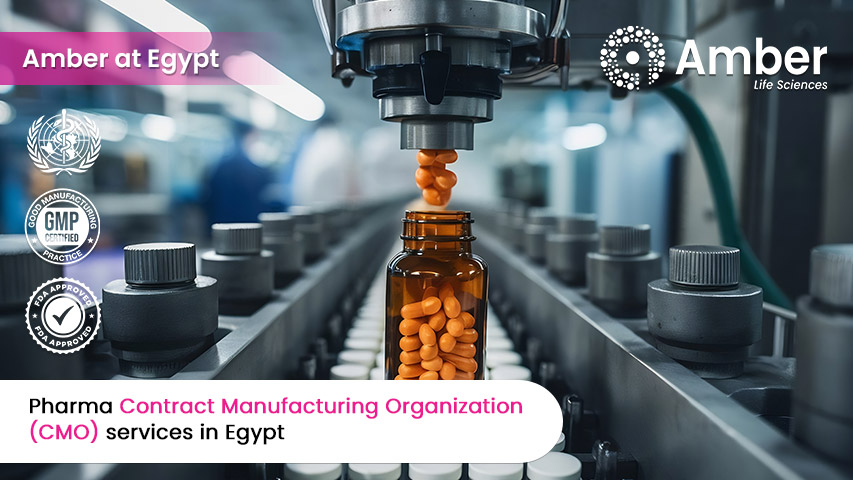
Egypt has the largest pharmaceutical market in the Middle East and North Africa (MENA), driven by a growing population, rising healthcare demand, and government support for local production. Contract Manufacturing Organizations (CMOs) in Egypt play a crucial role in meeting both domestic and export requirements.
The Egyptian Drug Authority (EDA) regulates the sector and enforces Good Manufacturing Practices (GMP), ensuring high-quality standards. The market includes:
- Large local manufacturers with surplus capacity.
- Multinational corporations (MNCs) with local plants.
- Specialized CMOs focusing on sterile, hormonal, or niche dosage forms.
Key Players in Egypt’s CMO Landscape
Some of the most prominent pharmaceutical CMOs include:
- EIPICO (Egyptian International Pharmaceutical Industries Co.) – Leading exporter with WHO-GMP facilities for tablets, capsules, syrups, and ointments.
- Eva Pharma – Known for innovative formulations and oncology injectables.
- Pharco Pharmaceuticals – A large manufacturer with strong R&D capabilities.
- Marcyrl Pharmaceutical Industries – Modern facilities with a wide product portfolio.
- Sedico Pharmaceuticals – Offers tablets, syrups, ampoules, and capsules.
- Multinational companies like GSK, Pfizer, Novartis, and Sanofi also operate manufacturing plants in Egypt, often partnering in licensing and contract agreements.
Services Offered by Egyptian CMOs
Egyptian CMOs provide a full range of pharmaceutical services, including:
- Formulation Development & Scale-Up – Adapting products for commercial production.
- Dosage Manufacturing – Tablets, capsules, powders, syrups, creams, gels, injectables, and sterile solutions.
- Packaging Solutions – Blister packs, bottles, cartons, and anti-counterfeiting features.
- Quality Control & Testing – Advanced QC labs ensure compliance with international standards.
- Regulatory Support – Assistance with product registration through the EDA.
Advantages of Partnering with an Egyptian CMO
- Cost-Effective – Lower manufacturing costs compared to Europe or North America.
- Strategic Location – Easy access to Africa, MENA, and CIS markets.
- High Standards – Many companies are WHO-GMP, EU, and GCC certified.
- Skilled Workforce – A large pool of qualified pharmacists and engineers.
- Government Support – Policies that encourage local production and export growth.
- Large Domestic Market – Egypt’s own population of 110+ million makes it a strong internal market.
Contract Manufacturing Organizations Challenges to Consider
- Regulatory Navigation – EDA processes may be lengthy and complex.
- IP Protection – While improving, contracts must be carefully managed.
- Logistics – Importing APIs and exporting finished goods requires reliable supply chains.
- Due Diligence – Audits and compliance checks are essential before finalizing a partnership.
Why Choose Amber Lifesciences Pvt. Ltd. for CMO Services in Egypt?
Amber Lifesciences Pvt. Ltd. is a global pharmaceutical manufacturer and exporter with deep experience in partnering with African and MENA markets.
We provide:
- WHO-GMP, EU-GMP, and USFDA certified facilities.
- Custom manufacturing for tablets, capsules, liquids, semi-solids, and injectables.
- Regulatory expertise for faster approvals with the Egyptian Drug Authority (EDA).
- Flexible packaging and labeling in compliance with Egyptian and export requirements.
- Proven supply chain strength, ensuring smooth distribution across Africa and the Middle East.
By choosing Amber Lifesciences, pharmaceutical companies gain a cost-effective, reliable, and globally compliant partner to manufacture and distribute products in Egypt and beyond.
Conclusion
Egypt is one of the most attractive destinations for pharmaceutical contract manufacturing, offering low costs, high standards, and access to key regional markets. With proper due diligence, partnering with an experienced Contract Manufacturing Organization like Amber Lifesciences Pvt. Ltd. ensures success in both the Egyptian domestic market and broader African and MENA regions.
